
| Device | Memory card |
|---|---|
| Manufacturer | SanDisk |
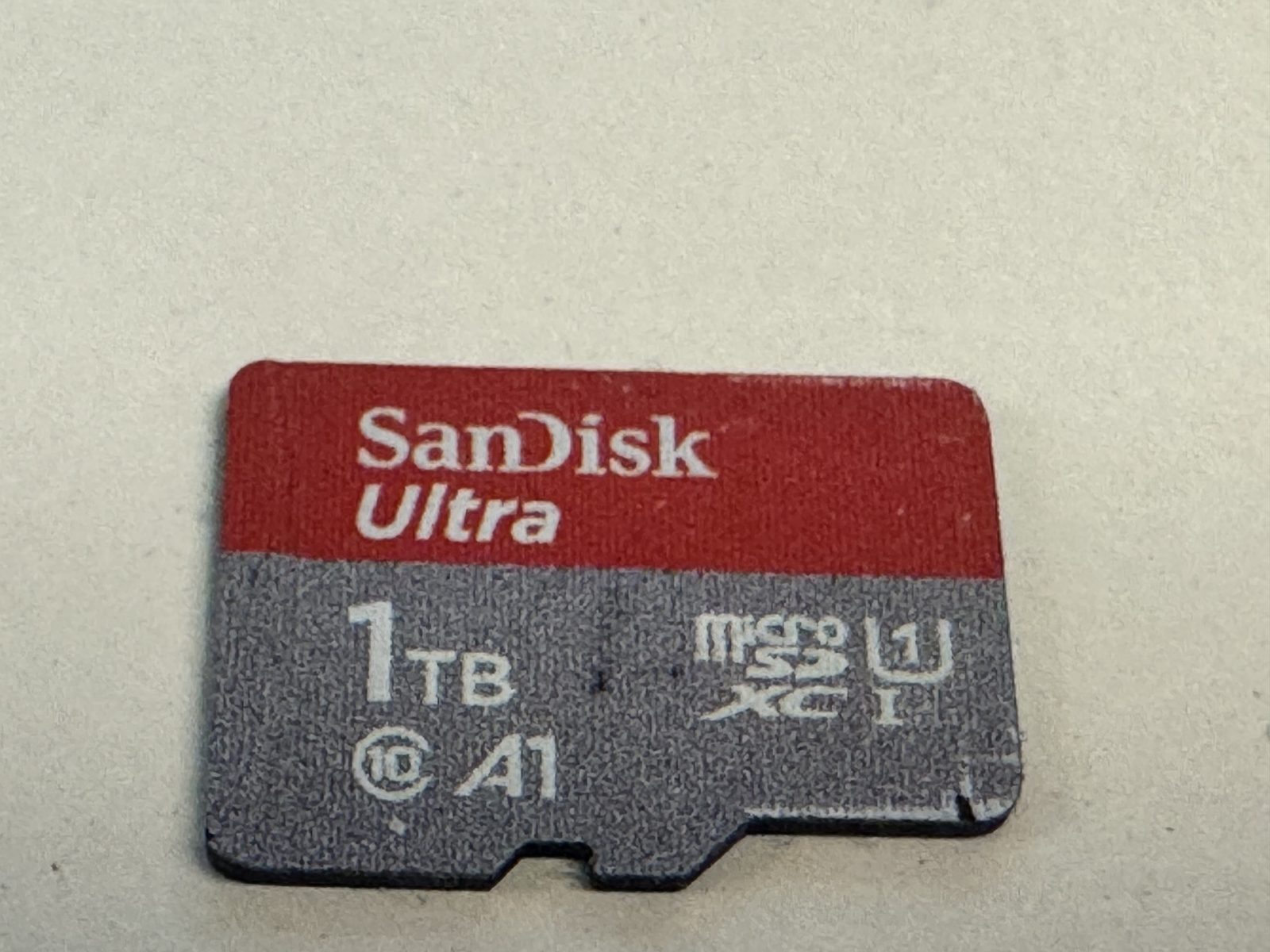
| Model | Ultra microSDXC (A1, UHS-I) |
| Capacity | 1 TB |
| Interface | microSDXC UHS-I |
| Outcome | Not recoverable |
Serial numbers and any customer-identifying details are deliberately omitted.
What came in
A 1 TB SanDisk Ultra microSD card that was no longer readable — it could not be accessed through a card reader or any normal means, which is what brought it to a lab rather than a repair shop.
What we found
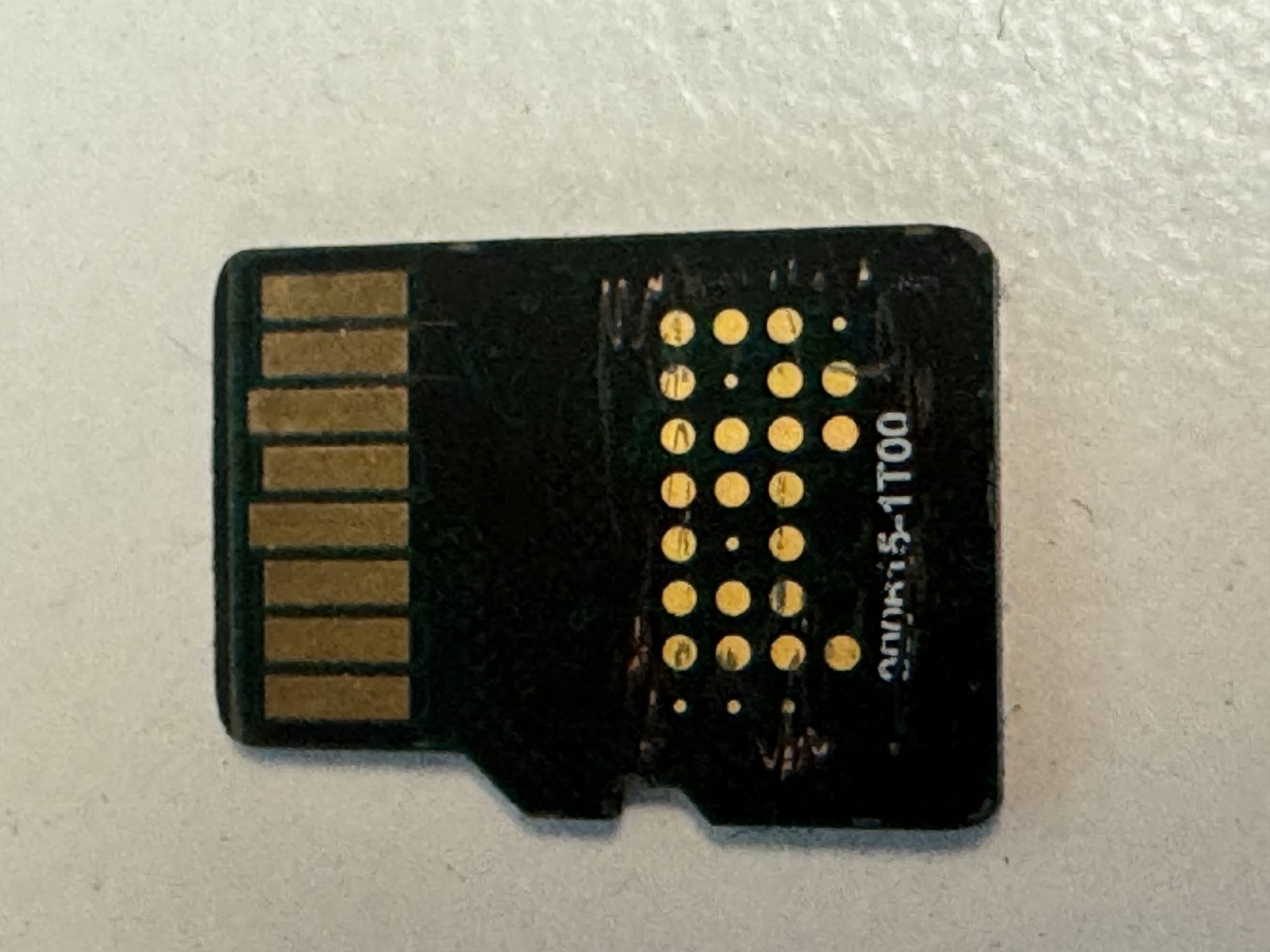
This is a monolithic card: the controller and NAND are fused into a single moulded package rather than existing as separate components, so there is no NAND chip to lift and read conventionally. Reading one at all means identifying the card's technical pinout and wiring directly to the exposed test pads. Beyond that, this generation of card uses LDPC (Low-Density Parity-Check) error correction, which is handled inside the original controller.
What we did
We identified the monolith pinout, wired the card to the exposed test points, and connected it to Rusolut VNR (Visual NAND Reconstructor). That worked — we were able to establish a connection and read the raw NAND. The obstacle came after: the data coming off the chip is LDPC-encoded, and decoding it requires the original controller's error-correction engine. Current flash recovery tooling cannot reconstruct user data from an LDPC-encoded raw dump on this class of device.
Outcome
Not recoverable. There was no recovery fee — we only charge when we get your data back.
This case is a good illustration of a limit that is not about effort or equipment. We got further than most: the pinout was identified, the connection was made, and the raw NAND was read. But on modern high-capacity monolithic cards the error correction is bound to the controller, and when that controller is gone the encoded data cannot currently be turned back into files. It is an industry-wide tooling limitation rather than a fault of this particular card — one that may ease as recovery tools evolve, but that is where things stand today. We told the customer this honestly and there was no recovery fee. If you want the underlying detail, we wrote about it in our guide to LDPC error correction.
Dealing with something similar? See our memory card data recovery service, browse more cases in the case log, or read about what makes recovery hard.
Have a memory card in similar shape? Start with a free evaluation — we'll tell you honestly what's possible with your device.
Request free evaluation →Free evaluation · No data, no fee · Talk directly with a technician.