
| Device | Flash drive |
|---|---|
| Manufacturer | Olympus |
| Model | Digital Voice Recorder |
| Capacity | Onboard eMMC |
| Interface | eMMC (chip-off) |
| Outcome | Full recovery |
Serial numbers and any customer-identifying details are deliberately omitted.
What came in
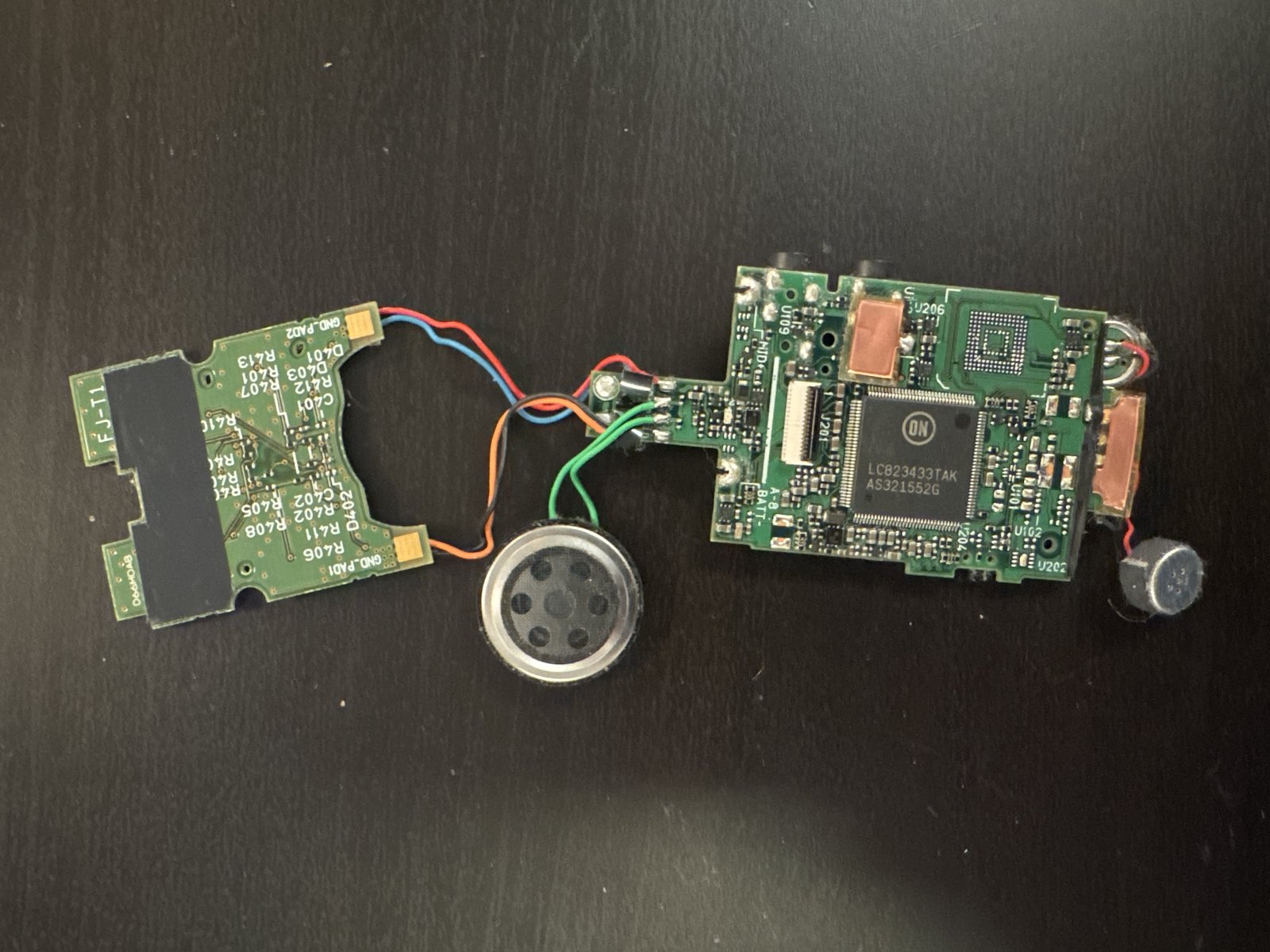
An Olympus digital voice recorder that had suffered an electronic failure — the device no longer powered up or functioned, so the owner couldn't reach the recordings stored on it.
What we found
The recordings live on an embedded eMMC flash chip soldered to the recorder's board. With the device's own electronics dead, there was no way to read that flash through the recorder itself — but the memory chip and the data on it were intact. That makes it a classic chip-off candidate: bypass the dead device entirely and read the memory directly.
What we did
We removed the eMMC chip from the board and read it directly on our equipment — imaging the raw flash outside the failed device. From that image we rebuilt the file structure the recorder used, extracted the audio recordings, and delivered the recovered data back to the client on a fresh flash drive.
Outcome
Full recovery.
When a device's electronics die but its flash memory survives, chip-off recovery is the route: lift the memory off the dead board and read it on dedicated hardware, then reconstruct the file system from the raw flash. It applies far beyond USB sticks and cards — voice recorders, cameras, and countless small devices store their data on embedded flash that outlives the gadget around it. See our flash drive data recovery service.
Dealing with something similar? See our flash drive data recovery service, browse more cases in the case log, or read about what makes recovery hard.
Have a flash drive in similar shape? Start with a free evaluation — we'll tell you honestly what's possible with your device.
Request free evaluation →Free evaluation · No data, no fee · Talk directly with a technician.